
How to Set Up a Postpartum Recovery Station Before Baby Arrives
The first days after birth involve a lot of resting, feeding, healing, and caring for your baby.
A postpartum recovery station keeps the things you reach for most often in one convenient place, so you do not have to search for supplies or repeatedly walk across the house.
You do not need an elaborate setup. A basket, rolling cart, or small table stocked with a few practical essentials can make those early days feel much more manageable.
This page contains Amazon affiliate links. As an Amazon Associate, I earn from qualifying purchases at no additional cost to you.
What to Put in Your Postpartum Recovery Station
Hydration and Easy Snacks
Keep a large water bottle within reach, especially if you are breastfeeding or pumping. Add a few shelf-stable snacks that can be opened and eaten with one hand.
Consider including:
Water bottle with a handle or straw
Electrolyte packets, if desired
Protein bars or snack bars
Nuts or trail mix
Crackers
Applesauce or fruit pouches
Mints or gum
Choose foods you already enjoy and follow any dietary guidance provided by your healthcare team.
Feeding Supplies
Your station should support however you plan to feed your baby. You can adjust it once you learn what you actually use.
Depending on your feeding plans, you may want:
Burp cloths
Nursing pads
Nipple balm
Milk-collection supplies
Pumping supplies
Bottles and formula supplies
A feeding or pumping log
A supportive pillow
Keep prepared formula, expressed milk, and used pump or bottle parts stored and cleaned according to current safety instructions.
Everyday Newborn Supplies
You do not need to move the entire nursery into your recovery station. Keep only enough supplies for a few routine changes.
Include:
Diapers
Wipes
Diaper cream
Changing pad
Two or three burp cloths
One spare outfit
A lightweight blanket for supervised use
A waterproof bag for damp or soiled items
Your baby should still have a separate, safe sleep space rather than sleeping in the recovery station, on a nursing pillow, or in an adult bed.
Comfort Items for Mom
Small comforts can make long stretches of feeding and resting easier.
Consider:
Lip balm
Hand lotion
Hair ties or clips
Tissues
A light blanket
Supportive pillows
Comfortable socks
Glasses or contact-lens supplies
Any prescribed or clinician-approved medications
Store medication where children cannot access it and follow the instructions from your healthcare team.
Practical Extras
These are the small items people often end up searching for once they are finally comfortable.
Add:
Extra-long phone charger
Headphones
Television remote
Small trash container or disposable bag
Notebook and pen
Night-light
Hand sanitizer
Basket for items that need to be returned to another room
Support for Your Mental Load
Your station can also make it easier to communicate what you need.
Keep a short list of:
People you can call for practical help
Questions for your healthcare provider
Feeding questions for your pediatrician or lactation professional
Medications and the time each was taken
Tasks a partner or visitor can handle without asking you to manage them
Start With Three Simple Decisions
Choose the place where you expect to rest and feed your baby most often.
Select a basket, rolling cart, or small table that is easy to reach.
Stock only the essentials, then ask your support person to refill the station as needed.
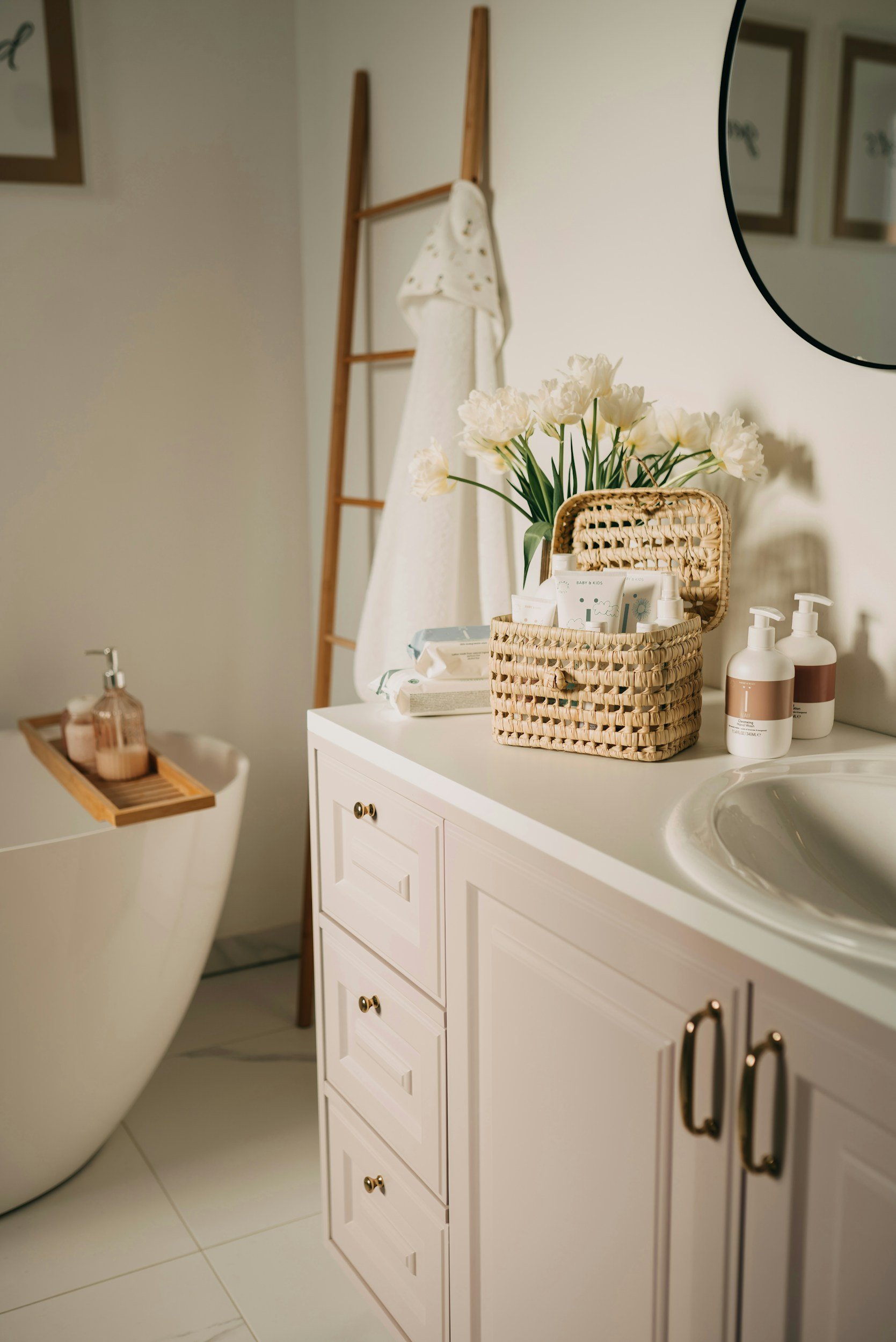
Create a Small Bathroom Recovery Station
Items used for personal care are usually more helpful in the bathroom than beside your bed or chair.
Depending on your recovery, your bathroom station may include:
Peri bottle / Perineal comfort products
Maternity pads
Disposable or comfortable underwear
Hemorrhoid-care supplies, if needed
Gentle hand soap
Clean washcloths
Small covered trash can
A change of comfortable clothing
Keep extra supplies together so your support person can quickly refill the basket.
Make the Station Work for Your Recovery
Place the most frequently used items between waist and shoulder height so you can reach them without stretching or bending.
If you have a cesarean birth, limited mobility, or significant soreness, ask someone to arrange the station before you come home and refill it each day.
You may also want a second, smaller station if you regularly spend time on another floor of your home. It does not need to duplicate everything. A few diapers, wipes, burp cloths, water, and snacks may be enough.
A Recovery Station Does Not Replace Postpartum Care
Keep your postpartum appointments and contact your healthcare provider if you are concerned about your physical or emotional recovery.
Seek prompt medical guidance for symptoms such as heavy bleeding, fever or chills, worsening pain, foul-smelling discharge, chest pain, difficulty breathing, severe headache, leg pain or swelling, or thoughts of harming yourself or your baby.